All Categories
Featured


Building High-Performance Research Centers in 2026
Table of Contents
There's no single blueprint for digital change. Effective strategies do share some typical qualities: they're grounded in service objectives, versatile enough to progress with emerging tech, and customized to an organization's people, processes, and industry.
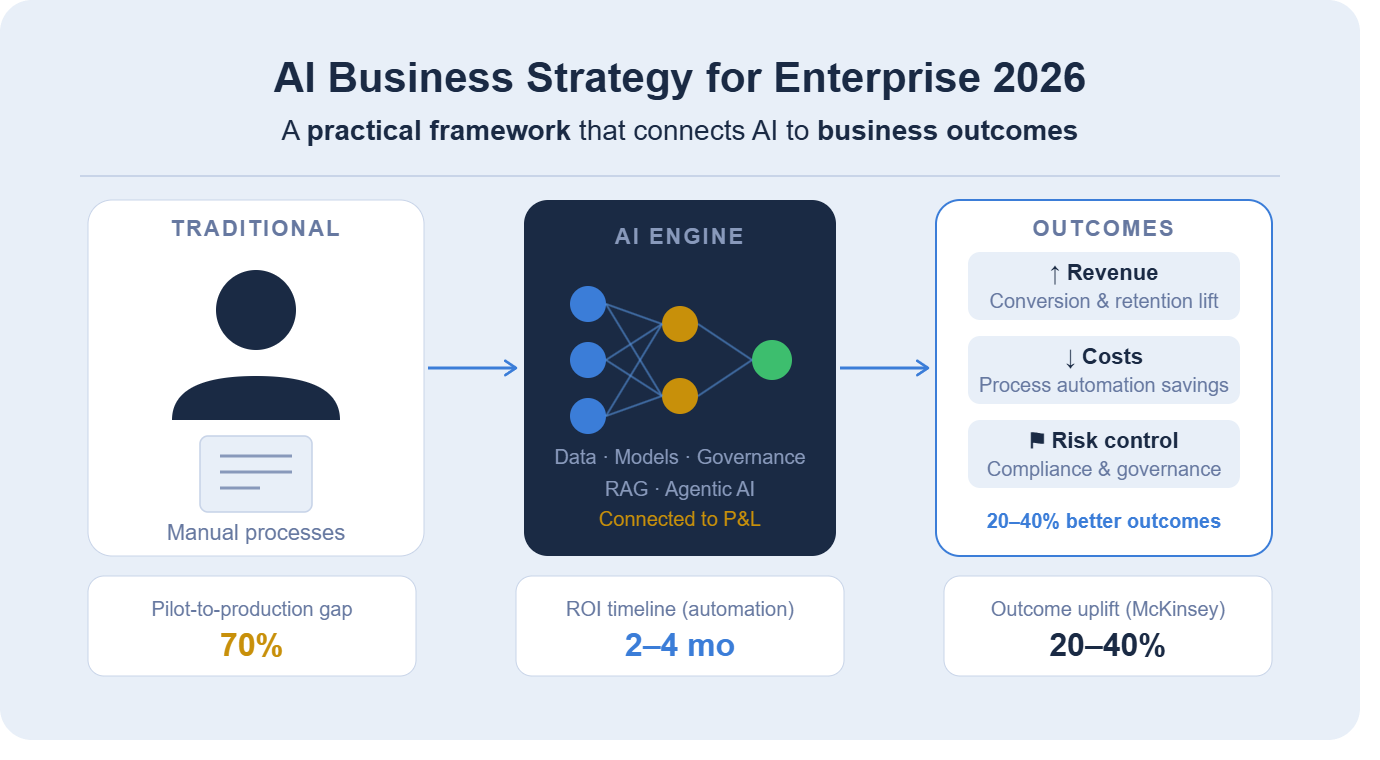
Start by identifying the essential outcomes you wish to achieve. Are you attempting to reduce costs, grow income, improve consumer experience, or develop more resistant facilities!.?.!? The most reliable techniques are created backwards from preferred outcomes to the innovations and processes that can provide them. Your strategy might consist of several focus areas depending upon what you're trying to achieve:: Enhance processes using automation, cloud migration, and AI-based optimization to decrease expenses and improve speed.
: Present brand-new products, services, or delivery models (like digital memberships, marketplaces, or self-service platforms) to create brand-new profits streams.: Gear up staff members with digital tools, make it possible for remote partnership, and buy upskilling to support improvement from within.: Enhance cybersecurity, enhance compliance, and design systems that are more adaptable and fault-tolerant.
Why Agile Research Hubs Drive Enterprise Success
: Use KPIs connected to both company efficiency and technical impact.: Start with pilot programs or "fast wins" that can be scaled up as soon as validated.: Assign ownership and accountability to cross-functional leaders who can drive the change.: Be all set to pivot as innovations shift and consumer expectations develop.
Designing Smart Systems for Future Scale: might focus on client gain access to and remote tracking. may emphasize digital onboarding, fraud prevention, and compliance. might focus on omnichannel experiences, supply chain automation, and customization. A digital improvement technique isn't a checklist it's a dynamic technique that links where your company is today with where it needs to go.
Digital transformation strategies are increasingly formed by the bigger shifts taking place around us. There's still high demand for remote work, digital partnership, and smooth online experiences, whether it's virtual health care, digital banking, or on-demand services.
Enhancing Corporate R&D ROI for Cloud Hubs
Businesses have actually had to rethink their operations and offerings to meet this brand-new truth: strategies need to show that shift.
Evaluate data at scale. Provide more customized and intelligent services. The most reliable improvement strategies now treat AI and post-pandemic habits not as short-term patterns, however as irreversible chauffeurs of development. Remaining appropriate means staying adaptive which starts with acknowledging how much the landscape has changed. Start by concentrating on organization impact, not technology for technology's sake.
Do not neglect individuals: assistance, training, and buy-in are what eventually turn strategies into development. Digital change happens throughout every industry, from retail and logistics to health care and government. To see this in action, let's check out two really different examples. When an eCommerce store, Amazon has ended up being a tech giant spanning retail, cloud computing, streaming, and wise home technology.
New Corporate Innovation Cycles for 2026
Introduced in 2005, Amazon Prime reset consumer expectations for online shopping, making quick, reliable, affordable delivery the new standard. Behind the scenes, Amazon has actually revolutionized satisfaction with automation and AI, deploying its one-millionth storage facility robotic in 2025. These robots manage tasks like locating, obtaining, and carrying stock, boosting efficiency and allowing over 700,000 staff members to move into higher-value functions.
Designing Smart Systems for Future ScaleUtilizes robotic arms, electronic cameras, and sensors to efficiently fill delivery cars. An AI-powered system that optimizes delivery paths and powers real-time customer tracking. Digital change isn't restricted to private business. The UK's National Health Service (NHS) has made significant strides in updating client care. Historically, scheduling a GP consultation involved calling throughout a short morning window a process that was infamously out-of-date and disappointed many clients.
Video consultations ended up being standard, lowering the requirement for in-person gos to while enhancing convenience for clients. A number of health centers introduced "virtual wards," where patients with chronic or less severe conditions could be from another location kept an eye on via wearable gadgets that track vital signs. This permitted them to stay in the house releasing up healthcare facility beds for more immediate cases and helping staff focus resources better.
Enhancing Corporate Innovation ROI for Smart Tech
And businesses that stand still risk ending up being out-of-date. By remaining on top of industry patterns and the technologies reshaping them, you can develop a business that not just keeps up but also leads the method.

Latest Posts

Is Your Infrastructure Prepared to Handle 2026 Tech?

Forecasting Your Corporate Tech Ecosystem of 2026
Enhancing Corporate R&D ROI for Smart Hubs