All Categories
Featured
Table of Contents
Customer experience will not enhance merely due to the fact that of a new interface if confusion still exists in the back workplace. To put it simply, each part either strengthens the others or decreases their value. That is why the technique needs to cover all four areas at the same time, even if execution takes place in phases. When improvement starts without a clear structure, focus is rapidly lost: dozens of parallel initiatives emerge, none of which reach conclusion.
To prevent this, a structured method is necessary. A digital transformation framework is a system of coordinates that allows handling modification rather than merely responding to problems. This structure ought to not be a universal design template that works equally well for a caf, a farming holding, and a worldwide bank. It is a set of control points that adjust to context while keeping the organization on course.
You require a truthful evaluation: where time is being wasted, where choices are stalling, which processes depend on a specific individual. After that, you require to set particular, quantifiable goals. reduce the time to market for a brand-new product from 4 months to 6 weeks; incorporate 80% of client inquiries into a single CRM; decrease the percentage of manual order processing from 40% to 5%.
It is important not to prepare whatever at as soon as. It is much better to pick two or 3 focus areas and finish them completely than to spread efforts across 10 directions and surface none.
When people understand what comes next, it is much easier for them to support change. One of the most typical errors is starting transformation with the selection of a platform. A strong framework operates in reverse: first come the objectives and procedures, and only then the tools. Technology needs to be an extension of service logic, not a different world that only IT professionals populate.
Managing Global Corporate R&D in 2026
As a result, in practice these frameworks either do not operate at all or lead in a completely different direction than meant. A strong improvement structure need to be flexible sufficient to adapt to truth, yet stiff sufficient to prevent initiatives from spreading out frantically. An excellent framework helps keep focus, track development, and correct course when something fails.
A business might have an outstanding technique, leadership support, and a properly designed presentation. Once application begins, due dates slip, decision-makers avoid duty, and groups burn out. What emerges is not change, but a limitless reorganization that everyone silently feels bitter.
It includes three phases that can be adapted to your market, structure, and aspirations. This stage is about preparing the ground before construction begins. Nobody sees it, but skipping it causes whatever else to collapse. At this stage, there are no new interfaces, no fancy "before/after" slides, and no grand launches.
Future Enterprise R&D Cycles for 2026
There is absolutely nothing worse than moving quick without comprehending where you are going. Secret objectives of this stage: Not generic declarations, however measurable expectations: what precisely should alter, which metrics will be impacted, and which choices will end up being faster, cheaper, or higher quality. For instance: minimize time-to-market for brand-new products from 6 months to two; reduce churn among SME customers by 15%; automate 60% of internal demands.
The change owner should have real decision-making authority. IT must comprehend company objectives, and service must comprehend technical constraints.
This phase may feel slow or ineffective, but in reality it is a financial investment in the speed of subsequent phases. This is the phase where digital change relocations from concept to action or to chaos, if top priorities are set incorrectly. This is when the very first noticeable modifications appear: systems go live, procedures shift, and new guidelines work.
Building Cloud-Native Enterprise Hubs for Tomorrow
The essential error at this phase is attempting to do whatever at the same time: implement ERP and CRM, automate logistics, revamp the website, and re-train everybody all at once. Rather of a digital advancement, the outcome is organizational paralysis. What to do rather: Select one or two top priority areas, bring them to quantifiable results, examine outcomes, lock in changes, and only then scale.
It must become part of daily work for everybody. Clear internal communication, training, and support are necessary. If the group does not comprehend why changes are happening, quiet resistance will follow. Successful application is about handling gradual changes in daily practices. If monthly the group works slightly differently, a little quicker, and slightly more transparently, you are on the ideal path.
Improvement is a brand-new operating model, and it only really works when it stops being perceived as something separate or short-term. What matters at this phase: Not in general terms of "worked or didn't work," but alter by change: effect on speed, expenses, errors, sales, and client complete satisfaction.
If brand-new guidelines are not working, they should be changed. If changes worked in one unit, they can be scaled.
Managing High-Impact Corporate Hubs in Transition
This is the moment when digital modification stops being a job and ends up being part of everyday operations. Companies often approach us after they have actually already started improvement however got stuck along the method.
What to do: start with a concrete organization medical diagnosis. Plainly specify what need to alter and how it will be measured.
Ways to Accelerate Full-Scale Tech Transformation in 2026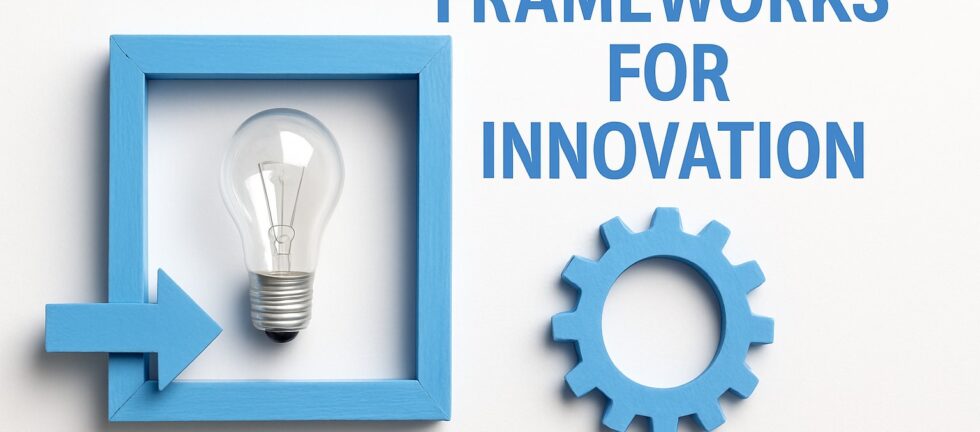
The group continues to work as in the past, with no modifications in culture, processes, or management. In this case, brand-new tools end up being costly decors.
Strategic Technical Guide for Operating Innovation
Groups working on change in between other tasks rarely reach outcomes. What to do: designate a devoted group, resources, and time.
Ways to Accelerate Full-Scale Tech Transformation in 2026A service can alter procedures, but if individuals do not rely on the system, withstand modification, or continue working out of practice, failure is almost guaranteed. What to do: include crucial individuals early. Discuss the logic behind changes, ensure transparent communication, and create an environment where it is safe to make errors, experiment, and adjust.

Latest Posts
Is Your Infrastructure Prepared to Handle 2026 Tech?
Forecasting Your Corporate Tech Ecosystem of 2026
Enhancing Corporate R&D ROI for Smart Hubs